

Trading de Volatilidade: Estratégias para Investidores
📈 Explore o trading de volatilidade, estratégias práticas e ativos essenciais para investir com mais segurança e potencializar ganhos no mercado instável.
Editado por
Gabriel Nogueira
Short term trading centers on buying and selling financial assets within a short time frame, often minutes to days, aiming to profit from quick market moves. Unlike long-term investing, which rides broader trends, short term trading demands rapid decisions and constant market attention.
A good starting point is understanding the key financial instruments involved. Stocks, options, futures, and forex are popular among short term traders thanks to their liquidity and volatility. For instance, day traders often focus on highly liquid stocks like Apple or Tesla because their frequent price swings create more opportunities.

Fast execution is a must. Traders typically use trading platforms from brokers like TD Ameritrade or Interactive Brokers offering real-time data and low latency order placement. Without speed, even smart strategies can fail.
Here's the thing — short term trading is not guessing. It relies on clear strategies such as momentum trading, where you buy assets showing strong upward movement, or scalping, which is about grabbing small profits repeatedly throughout the day. Successfully applying these requires tools for technical analysis. Charts, indicators like moving averages and RSI, and order flow data help gauge entry and exit points.
Risk management can't be overlooked. Because trading windows are narrow, sudden price shifts can cause big losses fast. Controls like stop-loss orders, position sizing, and daily loss limits protect capital. For example, setting a stop-loss at 2% below your purchase price can prevent a single trade from blowing up your account.
Practicing with simulation accounts before using real money helps build discipline and strategies without risking capital.
Lastly, developing a trading plan is vital. This plan spells out goals, strategies, risk limits, and even daily routines. It keeps emotions in check when markets heat up. To sum up, short term trading demands discipline, tools, and a clear approach but can offer active traders solid ways to benefit from market moves.
In this guide, we’ll break down strategies, essentials tools, managing risk smartly, and structuring your plan to help you trade better every day.
Grasping the fundamentals of short term trading lays the foundation for navigating fast-moving markets effectively. This knowledge helps traders react quickly to price changes and avoid costly mistakes.
Short term trading focuses on buying and selling assets within a brief window — often minutes, hours, or a few days. For example, a day trader might enter and exit a position within the same trading session, capitalizing on intraday volatility. This contrasts with holding positions for weeks or months.
Understanding your trade duration helps you select the right strategies and tools. Quick decisions require real-time data and strict risk limits to protect against sudden swings.
Unlike long-term investors who seek gradual growth or dividends over years, short term traders prioritize capitalizing on immediate price movements. This means they often rely more on technical analysis and market sentiment than on company fundamentals.
For example, a long-term investor might buy Apple stock based on its steady earnings, while a short term trader looks for moments when Apple’s price jumps on an earnings report or news.
Stocks and exchange-traded funds (ETFs) are popular for short term trading due to their liquidity and volatility. Blue-chip stocks like Microsoft or Tesla often see enough daily price moves to exploit for quick trades.
ETFs, like the SPDR S&P 500 ETF (SPY), track broader market trends and offer traders a way to play sectors or indexes without picking individual stocks.
The foreign exchange (Forex) market operates 24/5, allowing traders to respond to global economic events anytime. Currency pairs like EUR/USD often show small but frequent price shifts, ideal for scalping or momentum strategies.
Cryptocurrencies such as Bitcoin or Ethereum trade round the clock and exhibit high volatility. This can offer trading opportunities but also increases risks due to sudden price swings caused by market sentiment or regulatory news.
Futures contracts on commodities, indexes, or currencies let traders speculate on future price changes with leverage. For instance, crude oil futures can move sharply based on supply data, making them attractive for short term moves.
Options give the right, but not obligation, to buy or sell an asset at a set price before expiration. They add flexibility but require careful understanding of terms like strike prices and volatility. Traders often use options to hedge or amplify short term bets.

Starting with a clear view of what short term trading means, plus the markets best suited for it, can save you from jumping in blind and help you craft strategies that fit your style.
Understanding these basics sets the stage for smart decision-making and risk control when operating in fast-moving markets.
Short term trading demands strategies designed for quick market moves and nimble execution. Knowing which approach fits your style can make the difference between profits and losses. These strategies aren't just theoretical; they offer clear methods to capitalize on price swings within hours or days, rather than months or years.
Scalping for quick profits involves many very short trades trying to bank tiny gains repeatedly throughout the day. A scalper might buy shares of a high-volume stock like Tesla (TSLA) and sell them minutes later, capturing a few cents per share. While each profit is small, the volume of trades can add up swiftly. Scalping works best in highly liquid markets where prices react quickly to order flow.
This approach keeps traders glued to their screens, demanding rapid decisions and execution. It suits traders who thrive under pressure and can handle a fast pace without letting emotions impair judgment. However, scalping requires low transaction costs; otherwise, fees will eat into those small wins.
Momentum trading basics focus on stocks or assets showing strong directional moves backed by volume. Instead of aiming for tiny gains, momentum traders look for sustained trends, riding the wave so long as the price keeps pushing forward. For example, a momentum trader might spot a biotech stock breaking out after positive FDA news and jump in to ride the surge.
Momentum trading combines technical indicators with news catalysts. It requires timing entry points just as momentum builds and exiting before the move fades. This strategy offers bigger profit potential than scalping but carries higher risk if momentum reverses suddenly.
Using technical analysis to capture trends allows swing traders to spot when a stock is likely to move in a predictable pattern over several days. They employ tools like moving averages, MACD, and volume trends to identify setups. For instance, a trader might buy when a stock crosses above its 20-day moving average, signaling an upswing.
This method lets traders capture larger moves than day trading without the need to watch markets all day. Swing trading balances opportunity and flexibility, making it attractive for those who can’t monitor trades minute-by-minute.
Entry and exit timing is crucial for swing traders. Buying too early risks buying into a false start, while late entry reduces profit potential. Similarly, deciding when to sell—whether locking in profits at resistance levels or cutting losses when a trend fails—can make or break a trade.
Successful swing traders often set clear rules for entries and exits based on technical levels, like support and resistance, and stick to them. This discipline helps minimize emotional decisions and optimizes returns over time.
Whether scalping pennies or riding multi-day swings, picking the right strategy—and mastering its timing—is key to short term trading success.
Short term traders rely heavily on specialized tools and indicators to make swift, informed decisions. These resources provide real-time insights, helping traders capitalize on fleeting market opportunities while managing risks efficiently. Choosing the right software and understanding key technical indicators can mean the difference between a profitable day and losses piling up.
Real-time data and charting are the backbone of short term trading. Traders need access to up-to-the-second price movements, which means platforms like Thinkorswim, Interactive Brokers, or TradeStation are popular for their speed and reliability. Without real-time data, you’re essentially flying blind, as delays of even a few seconds can cause missed entry or exit points.
Effective charting tools let you visualize price trends and patterns instantly. For example, candlestick charts with customizable time frames help traders spot reversals or breakouts in real time. A trader watching Apple’s stock for a 5-minute breakout setup won’t wait hours to see if the pattern is confirmed—fast access to charts is essential for timely decisions.
Order execution capabilities are just as vital. Speed matters when placing trades, especially when seconds can swing profits by hundreds or thousands of dollars. Platforms that support market, limit, stop, and conditional orders directly from the chart are preferred. This setup allows you to launch trades with minimal clicks, ensuring you get in or out at desired prices.
Also, look for platforms with low latency and reliable connectivity to exchanges. For instance, a trader using Interactive Brokers benefits from their smart routing system, which finds the best prices across multiple venues, improving fill rates. Slow or clunky order execution can increase slippage, cutting into your gains.
Moving averages and RSI (Relative Strength Index) are among the most widely used indicators in short term trading. Moving averages smooth out price data, highlighting the underlying trend. Popular choices like the 20-day or 50-day moving averages help traders identify when to enter or exit based on crossovers or price interactions.
RSI measures momentum, indicating overbought or oversold conditions. For instance, an RSI reading above 70 typically signals overbought assets, warning traders that a pullback might be near. Conversely, readings under 30 suggest oversold conditions that could precede a bounce. Combining these with moving averages enhances accuracy by confirming the trend’s strength.
Volume analysis and Bollinger Bands add further depth. Volume shows the intensity behind price moves—a surge in volume during a breakout confirms trader conviction. Low volume rallies might signal traps or weak trends. Bollinger Bands generate dynamic support and resistance levels by plotting bands two standard deviations from a moving average.
When prices touch the upper band, it may indicate overextension, while the lower band hints at potential support. A short term trader watching Tesla might use Bollinger Bands to time entries: buying when the price bounces off the lower band with rising volume can increase the odds of a quick gain.
Successfully combining the right tools and indicators enables traders to spot high-probability trades and manage risks better. It’s not just about the indicators themselves but how you interpret them alongside live market data and swift execution.
In short term trading, having robust platforms with reliable data feeds and mastering key indicators like moving averages, RSI, volume, and Bollinger Bands can significantly improve your trade timing and outcomes.
Risk management and discipline form the backbone of successful short term trading. Without a solid plan to limit losses and control emotional impulses, even the sharpest strategies can crumble. Traders operate in fast-moving markets where price swings can erase gains or double losses in moments. Staying disciplined means sticking to predefined rules for exit points and trade sizes, preventing emotional decisions that might lead to overtrading or badly timed trades.
Stop-loss orders act as a safety net to cap losses before they spiral out of control. For example, if a trader buys a stock at $50, setting a stop-loss at $47 limits the loss to $3 per share if the price moves against them. This approach preserves capital and keeps losses predictable, avoiding the all-too-common pitfall of holding onto losing trades in the hope of a rebound. Practically, this means attaching a stop-loss as soon as the position is opened and not adjusting it based on emotions or hope.
Alongside limiting losses, setting take-profit levels locks in gains and prevents giving back profits. Suppose a trader sets a target at $55 on that $50 purchase; this locks in a $5 per share profit if the price reaches the target. Choosing realistic profit targets based on recent price action and volatility helps maintain a consistent risk-reward ratio—often aiming for at least 2:1, meaning potential gains are twice the size of possible losses. It also avoids the temptation to hold on too long, which can erase gains if the market reverses.
Market swings can rattle even experienced traders. Staying disciplined means following your plan through these ups and downs without chasing trades out of fear or greed. For example, after a losing day, it’s tempting to jump into several trades to make back losses quickly. But this often leads to sloppy decisions and bigger losses. Sticking to predefined trade setups and daily trade limits can prevent such reckless behavior.
Emotional and cognitive biases can cloud judgment. Confirmation bias, for instance, makes traders favor information supporting their existing views while ignoring red flags. Say a trader believes a stock will rise and overlooks negative news; this can cost money. Awareness of such biases enables traders to question their assumptions and seek balanced perspectives. Keeping a trading journal helps spot recurring mistakes tied to emotional reactions or biases, allowing adjustments before they escalate into costly errors.
The bottom line is that risk management tools like stop-losses and profit targets, combined with emotional discipline, protect your capital and keep your trading consistent. These elements help you avoid impulse decisions that erode profits and build a foundation for long-term success in short term trading.
Creating a clear trading plan is fundamental to succeeding in short term trading. Without defined rules and goals, traders risk falling prey to emotional decisions or chasing losses. A solid plan sets boundaries around what, when, and how you trade, helping you stay disciplined through market noise.
Risk tolerance is the amount of loss you're ready to accept on any trade without panicking or deviating from your plan. Say you decide you're comfortable risking 1% of your trading account on each position. That helps you protect your capital during rough patches. Clear profit goals, like targeting 2% gains per trade, give you an exit strategy rather than hoping prices just keep rising. If you don't define these limits, your trading can quickly become erratic and costly.
Choosing your trading hours carefully is just as important. Some traders prefer the U.S. stock market's regular hours, while others focus on Europe or Forex markets that operate almost 24/5. Aligning your trading schedule with market hours where volatility fits your style improves opportunity and reduces slippage risks. For example, scalpers thrive during peak volume on the NASDAQ between 9:30 AM and 11:30 AM ET. Additionally, picking specific markets suited to your expertise—like tech stocks or currency pairs—avoids spreading yourself too thin.
Testing your trading methods against past market data reveals what works and what doesn’t before risking real money. If your momentum strategy on tech stocks backtests poorly across recent years, tweaking entry points or stop losses could save you from losses. Tools like TradingView or ThinkorSwim offer accessible platforms for detailed backtests that simulate your plan’s profitability and drawdowns.
Backtesting isn't a guaranteed forecast but a reality check that weeds out weak tactics early.
Markets evolve, so your plan should, too. Regularly reviewing trades helps identify patterns—both good and bad. Maybe you notice your profit targets are too tight, causing you to exit winners prematurely. Or your stop losses need adjusting because certain stocks tend to swing wider. The key is staying flexible without abandoning discipline. By adapting systematically, you sharpen your edge and avoid mental fatigue.
Bottom line: a well-crafted short term trading plan folds goals, risk, timing, and ongoing feedback into a roadmap. Sticking to this roadmap even through ups and downs shapes consistent and confident trading results.
📈 Explore o trading de volatilidade, estratégias práticas e ativos essenciais para investir com mais segurança e potencializar ganhos no mercado instável.
🚀 Descubra fundamentos e práticas essenciais para o trading online: tipos de ativos, plataformas confiáveis e estratégias para negociar com segurança e eficiência.

📈 Descubra as vantagens do trading com CFDs: flexibilidade, alavancagem e acesso a vários mercados. Ideal para quem quer operar em alta ou baixa! 💡
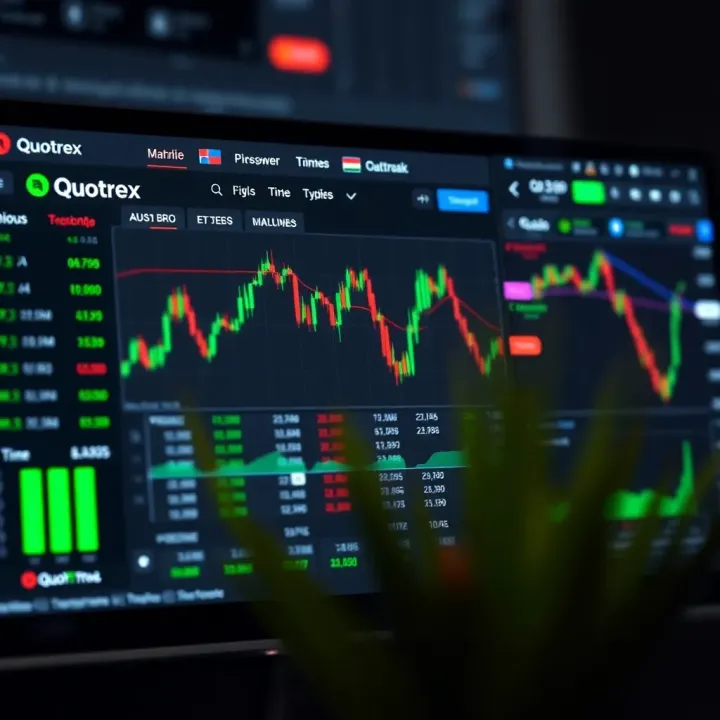
🔍 Explore a Quotrex: análise detalhada dos recursos, segurança, prós e contras. Saiba como se cadastrar, operar e obter resultados na plataforma! 📈
Baseado em 7 avaliações